What I build
Meeting prep briefings.
The first ten minutes of every meeting are wasted on catching up. Where did we leave off? What did we decide last time? What has changed since then? I build a system that answers those questions before the meeting starts, so you walk in already caught up.
The problem
The first ten minutes are a tax.
You join the call and spend the first ten minutes reconstructing context. Scrolling through old emails, searching Slack, trying to remember what was decided three weeks ago. The person across from you is doing the same thing (which is why you are both pretending to remember). The real conversation starts at minute eleven.
What it looks like
A dossier, not a Google search.
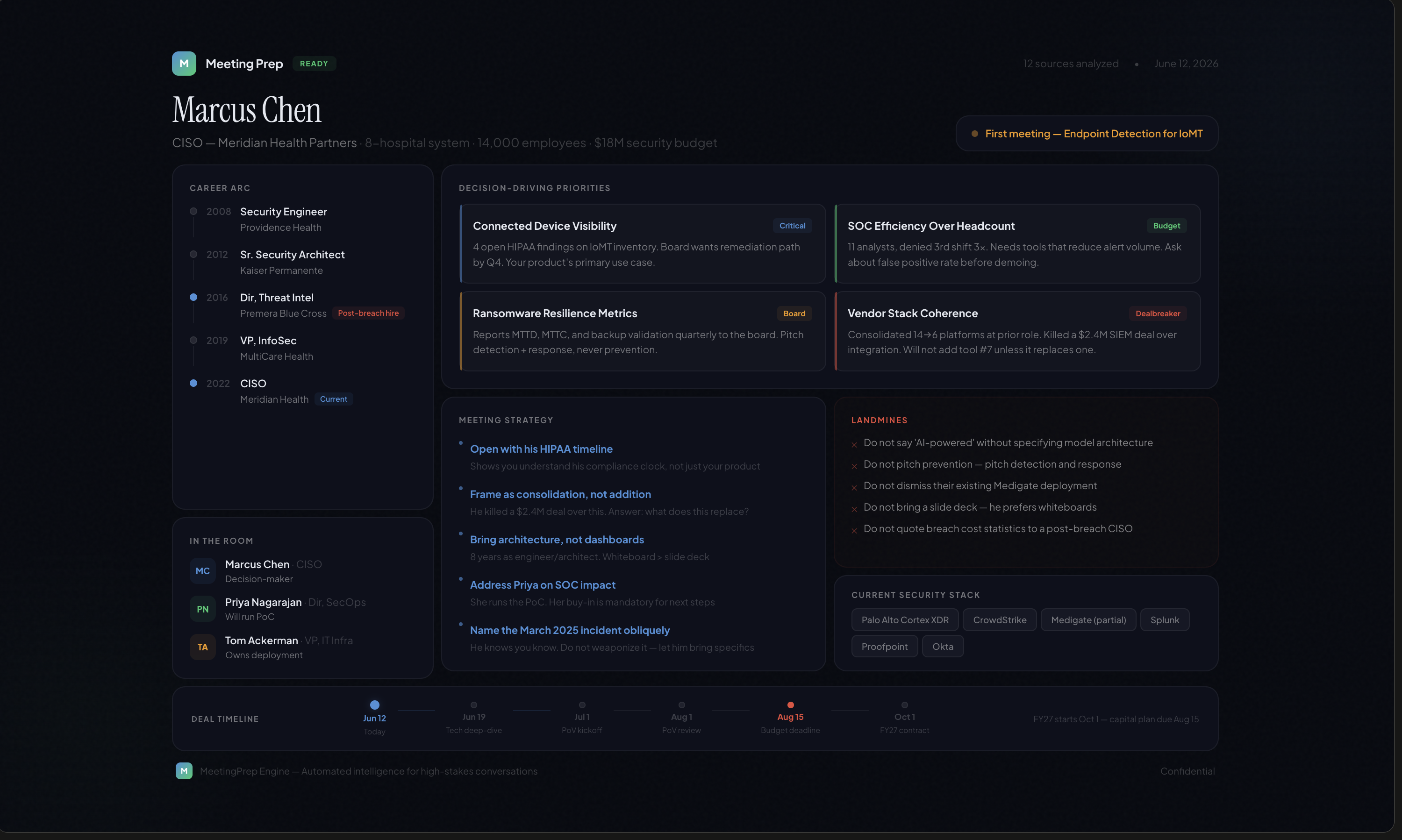
What the brief contains
Everything you need, nothing you do not.
Last conversation summary
What you discussed, what was decided, what was left open. Pulled from your notes, email, and CRM.
Relevant documents
The proposal, the contract, the deck they sent. Linked, not attached. One click to review.
Recent context
What the person has said publicly: LinkedIn, press, earnings calls. What their company announced. You walk in knowing what they know.
Open questions
The things left unresolved from last time. The decisions that need to be made this meeting. Your agenda, pre-built.
What changes
Meetings that start at the decision.
Meetings start at the decision
No recap. No "where did we leave off." The conversation begins where the work begins.
You look prepared
Because you are. The person across from you notices when you reference something specific they said last time.
Follow-through is visible
Action items from the last meeting are listed. You can report back on each one without checking your notes.
Relationships compound
Each meeting builds on the last because the context carries forward instead of resetting.
Walk into every meeting already caught up.
Think about your next external meeting. Now imagine walking in with a one-page brief already written. I build the system that writes it, and teach you to run it before every call.
Book a call